

Sciatica: What Causes It, What Actually Helps, and When Should You See a Physio?
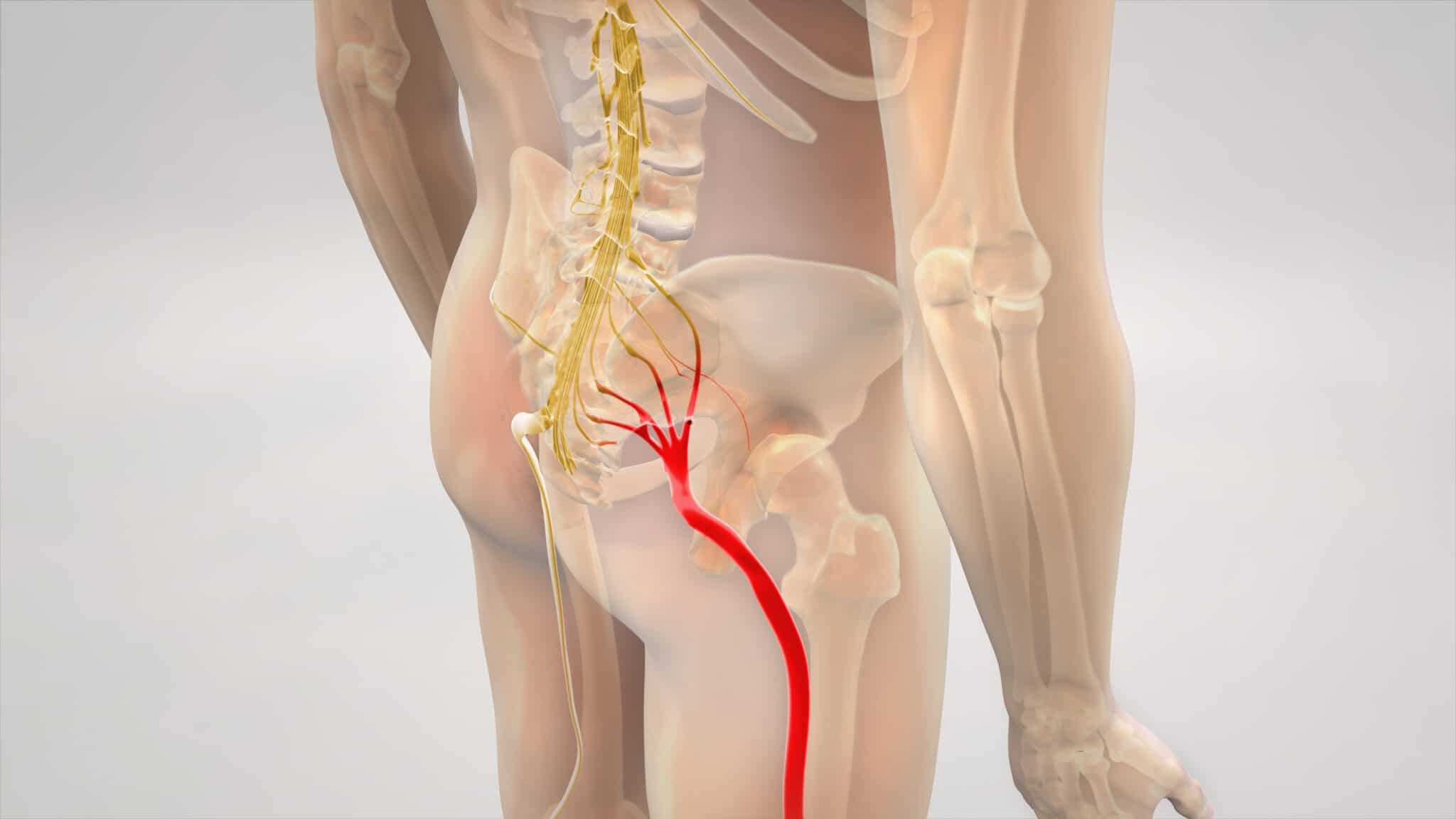
Sciatica is a term that most people have heard, but it is often used to describe almost any pain that travels from the lower back or buttock into the leg.
True sciatica is more specific. It generally refers to pain caused by irritation or compression of a lumbar or sacral nerve root, producing symptoms along the course of the sciatic nerve and into the leg. It is a form of lumbar radicular pain, and it may or may not be accompanied by objective neurological changes such as weakness, altered sensation or reduced reflexes.
For some people, sciatica is a relatively short-lived episode that settles with time and appropriate activity. For others, severe leg pain, numbness or weakness can persist and interfere substantially with work, sleep, exercise and everyday life.
Understanding what is actually happening is important because not all leg pain is sciatica, not every disc bulge causes symptoms, and an MRI is not automatically required.
What is sciatica?
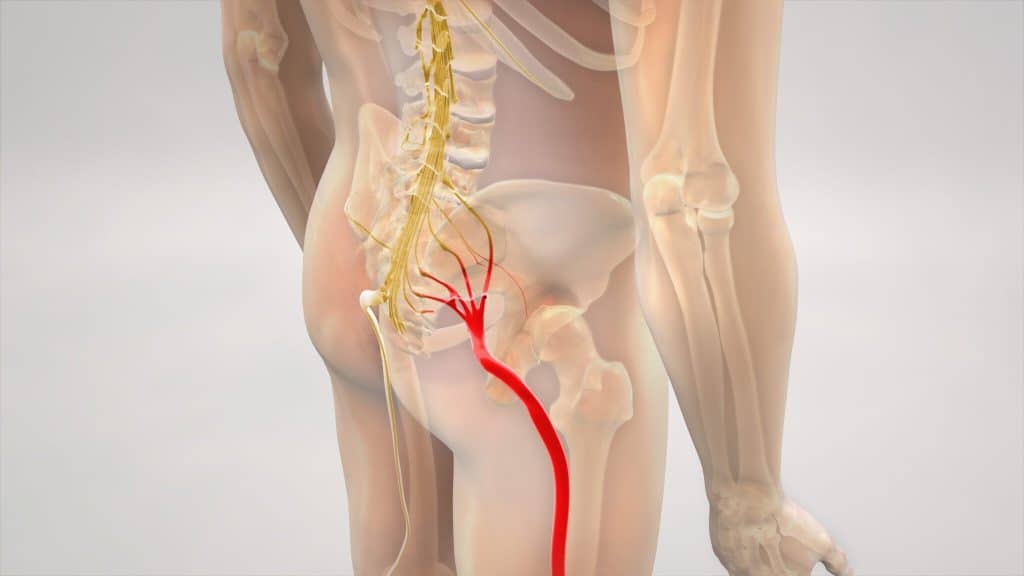
The sciatic nerve is the largest peripheral nerve in the body. It is formed from nerve roots arising from the lower lumbar and sacral spine before travelling through the buttock and down the leg.
The term sciatica is generally used when irritation of one or more of these nerve roots produces radiating symptoms into the leg.
Common symptoms include:
- Pain travelling from the lower back or buttock into the leg
- Pain extending below the knee
- Tingling or pins and needles
- Numbness
- Burning or electric-shock-like pain
- Increased pain with coughing, sneezing or straining
- Weakness in particular movements of the leg or foot.
Sciatica can occur with or without significant lower back pain. In some people, the leg pain is considerably worse than the back pain.
What causes sciatica?
There are several possible causes of irritation or compression of a lumbar nerve root.
Disc herniation
One of the most common causes is a lumbar disc herniation.
Between the vertebrae are intervertebral discs that act as load-bearing structures between the bones of the spine. A disc can develop a protrusion or herniation that comes into contact with a nearby nerve root.
However, the relationship between a disc and sciatica is more complicated than simply saying:
“The disc is pressing on the nerve.”
Mechanical compression can be important, but inflammation and chemical irritation around the nerve root also appear to contribute to symptoms.
This is one reason why someone can have severe leg pain without having dramatic mechanical compression on an MRI.
It is also why a disc that looks abnormal on an MRI does not necessarily explain someone’s symptoms.
Spinal stenosis
Spinal stenosis refers to narrowing of the spaces available for the spinal nerves.
This can occur in the central spinal canal, the lateral recess or the neural foramen through which individual nerve roots exit the spine.
Stenosis is more common with increasing age as discs, facet joints and other spinal structures undergo degenerative changes.
Symptoms can include leg pain, numbness or weakness, particularly when standing or walking. Some people experience neurogenic claudication, where symptoms increase with prolonged standing or walking and improve with sitting or bending forwards.
Other causes
Less commonly, nerve-root symptoms can result from:
- Spondylolisthesis
- Spinal or foraminal narrowing from arthritic changes
- Trauma
- Spinal inflammation or infection
- Less common space-occupying lesions.
This is one reason a proper clinical assessment is important. The diagnosis should not simply be made from the location of the pain.
Does a disc bulge mean you have sciatica?
No.
This is one of the most important things to understand about back imaging.
Disc bulges, disc degeneration, facet-joint changes and other abnormalities are common findings in people who have no back pain at all.
An MRI therefore needs to be interpreted in the context of the person’s symptoms and clinical examination.
For example, an MRI might demonstrate a disc protrusion at L4–5. If the patient has pain and neurological symptoms consistent with the L5 nerve root, and the scan shows the L5 nerve root being compromised at that level, the findings may be highly relevant.
But if the scan shows a disc bulge that does not correspond with the person’s symptoms, it may simply be an incidental finding.
This is why current guidelines do not recommend routinely imaging people with low back pain or sciatica in a non-specialist setting. Imaging is generally considered when the result is likely to change management.
What does a physiotherapist look for when assessing sciatica?
A good assessment of suspected sciatica involves considerably more than checking whether bending forwards hurts.
We will generally assess:
Your symptoms
We want to understand:
- Where the pain starts
- How far it travels
- Whether it extends below the knee
- Whether there is numbness or tingling
- Whether you have noticed weakness
- What positions and activities aggravate or relieve it
- Whether coughing, sneezing or straining affects the symptoms
- How the symptoms have changed over time.
Neurological function
Where appropriate, we assess the function of individual nerve roots by examining:
- Muscle strength
- Sensation
- Reflexes
- Walking and functional movements.
Different nerve roots supply different muscles and areas of skin. For example, weakness of ankle dorsiflexion or great-toe extension can suggest involvement of the L5 nerve root, while changes in plantar-flexion strength or the Achilles reflex can be associated with S1 involvement.
This information is particularly important because progressive neurological weakness is different from pain alone and can alter the urgency and type of further investigation required.
Neural sensitivity
Tests such as the straight-leg raise and slump test can be used to assess sensitivity of the neural tissues.
These tests are not simply “hamstring flexibility tests”. When performed appropriately, reproduction of the patient’s familiar radiating symptoms can provide information about nerve-root or neural mechanosensitivity.
Do you need an MRI?
Usually, not immediately.
This can be surprising to people who have severe leg pain.
An MRI is very good at showing the anatomy of the lumbar spine, but the presence of an abnormality does not automatically tell us what is causing the pain. Unnecessary imaging can also identify abnormalities that are unrelated to the person’s symptoms and potentially lead to unnecessary concern or further intervention.
For uncomplicated sciatica, clinical assessment and appropriate conservative management are often the initial approach.
MRI becomes more important when:
- Symptoms are not improving as expected
- There is significant or progressive neurological weakness
- A serious underlying condition is suspected
- An invasive treatment such as surgery is being considered
- The imaging result is likely to change management.
Current guidelines recommend against routine imaging in a non-specialist setting and recommend imaging when the result is likely to change management.
Should you rest when you have sciatica?
Usually, prolonged bed rest is not the answer.
Sciatica can be extremely painful, and there may be a period where reducing certain activities is sensible. But complete inactivity can make the transition back to normal activity more difficult.
Current clinical guidance recommends providing people with information about their condition and encouraging them to continue normal activities as much as reasonably possible. Exercise can also be incorporated according to the individual’s symptoms, capabilities and stage of recovery.
This does not mean you should simply “push through” severe nerve pain.
Instead, activity usually needs to be modified and progressively increased.
For example, someone who normally runs may temporarily need to reduce running while continuing to walk, cycle or perform selected strengthening exercises. As symptoms settle, running can then be gradually reintroduced.
The appropriate amount of activity is therefore individual.
Does physiotherapy help sciatica?
For many people with sciatica, physiotherapy forms an important part of conservative management.
However, physiotherapy is not a single treatment. It is a combination of clinical assessment, education, exercise, activity modification and, where appropriate, hands-on treatment, tailored to the individual’s presentation.
Current clinical guidelines recommend exercise-based management for people with low back pain with or without sciatica, while manual therapy may be considered as part of a broader treatment program that includes exercise.
The objective is not simply to find an exercise that temporarily reduces pain. It is to help the person understand their symptoms, maintain as much normal activity as possible, restore physical capacity and progressively return to the activities that matter to them.
Education and reassurance
Understanding what is happening can be extremely helpful.
A person who believes that they have “damaged their spine” every time they bend forward may understandably become fearful of movement. Explaining what the clinical findings mean can help people return to normal movement and activity.
Exercise and progressive loading
Exercise can be used to maintain or progressively restore:
- Spinal and hip movement
- Leg strength
- Trunk strength and endurance
- General cardiovascular fitness
- Functional capacity.
The exercises need to be selected according to the individual’s presentation rather than based on the assumption that one particular exercise is a treatment for “sciatica”.
Neural mobilisation
In selected patients, techniques designed to gently mobilise the nervous system may be incorporated into treatment.
There is emerging evidence for combining exercise with neural mobilisation in some people with sciatica, although the precise magnitude and durability of benefit varies between studies and patient groups. Recent research has identified exercise combined with neural mobilisation among interventions showing potential benefit for chronic sciatica, although the certainty of evidence remains limited.
Manual therapy
Spinal mobilisation, manipulation or soft-tissue techniques may be useful for some patients, particularly when incorporated into a broader rehabilitation program.
Importantly, current guidelines recommend manual therapy as part of a treatment package that includes exercise rather than as a stand-alone treatment.
Returning to normal activity
One of the most important roles of physiotherapy is helping people progressively return to the activities they have stopped doing.
That might mean returning to:
- Work
- Gym training
- Running
- Golf
- Gardening
- Lifting
- Playing sport.
The appropriate progression depends on the individual’s symptoms and physical capacity.
The aim is not to avoid loading the spine forever. The aim is to gradually restore the capacity to tolerate normal loading.
What does the research say about physiotherapy for sciatica?
The research on sciatica is more complicated than the research on many common musculoskeletal conditions.
Different studies use different definitions of sciatica and investigate very different physiotherapy interventions. Consequently, it is difficult to make a single statement about the effectiveness of “physiotherapy” as though it were one treatment.
There is nevertheless good evidence supporting several of the fundamental principles used in physiotherapy management: remaining active, exercise-based rehabilitation, education and appropriately selected physical treatments.
For example, a systematic review of exercise versus advice to remain active found a small short-term advantage for exercise in reducing leg pain in people with sciatica, while longer-term outcomes were similar.
Clinical guidelines consequently recommend exercise and continued activity as central components of conservative management. NICE specifically recommends exercise programmes for people with low back pain with or without sciatica and recommends that manual therapy, when used, forms part of an exercise-based treatment package.
More recent research has also investigated specific combinations of interventions. For example, a 2025 network meta-analysis of 50 randomised trials involving almost 5,000 people with chronic sciatica identified several non-surgical interventions that may provide short-term improvements in leg pain, including exercise combined with neural mobilisation. The authors did, however, rate the certainty of much of this evidence as very low, highlighting the difficulty of drawing conclusions about one particular treatment approach for all patients.
The practical message is therefore more useful than simply asking whether “physiotherapy works”:
There is no single physiotherapy treatment for sciatica. The most appropriate treatment depends on the cause, severity, irritability, neurological findings and stage of recovery.
A good physiotherapy assessment helps determine what the individual needs rather than applying the same treatment to every person with leg pain.
How long does sciatica take to improve?
This varies considerably.
Many people experience substantial improvement over the first several weeks, particularly when the episode is acute and there is no significant or progressive neurological deficit.
However, recovery is not always linear.
Symptoms can fluctuate, and some people experience persistent or recurrent episodes.
The important point is that persistent symptoms do not automatically mean that the nerve is being permanently damaged.
When should you see a doctor?
Most cases of sciatica do not require emergency medical treatment. However, there are some situations where medical assessment should not be delayed.
Seek urgent medical assessment if you develop:
- New difficulty controlling your bladder or bowel
- Difficulty initiating urination or urinary retention
- Numbness around the genitals, anus or “saddle” region
- Significant or rapidly worsening weakness in one or both legs
- Severe neurological symptoms affecting both legs.
These can be features of cauda equina syndrome or severe neurological compromise, which require urgent assessment.
Medical assessment is also important when there are other features suggesting a potentially serious cause, such as significant trauma, fever or infection, a history of cancer, or other concerning systemic symptoms.
What about surgery?
Most people with sciatica do not automatically require surgery.
However, surgery can be an appropriate treatment for selected patients, particularly when there is persistent disabling sciatica associated with a structural lesion that corresponds with the clinical findings and has not adequately improved with non-surgical management.
Current NICE guidance recommends considering spinal decompression when non-surgical treatment has not improved pain or function and the radiological findings are consistent with the symptoms.
This is an important distinction.
The decision to operate should not be based simply on the presence of a disc bulge or degenerative changes on an MRI. The symptoms, neurological examination, imaging findings and clinical course all need to make sense together.
For some people with acute and severe sciatica, epidural injections may also be considered as part of medical management.
The bottom line
Sciatica is more than simply “a bad back”.
It involves irritation or dysfunction of a spinal nerve root and can cause pain, altered sensation and sometimes weakness in the leg. Disc herniation is an important cause, but it is not the only one.
The good news is that many people improve without surgery.
The challenge is determining what type of sciatica you have, how irritable it is, whether there is neurological involvement, and what level of activity and treatment is appropriate at that stage of recovery.
Physiotherapy can play an important role in this process through clinical assessment, education, symptom management and progressive rehabilitation. It can also help identify patients who need further medical investigation or specialist assessment.
Most importantly, an MRI finding is not a diagnosis by itself. Your symptoms and clinical examination need to correspond with what is seen on the scan.
If you have pain travelling from your back or buttock into your leg, particularly if you have numbness, tingling or weakness, a physiotherapy assessment can help determine whether your symptoms are consistent with sciatica and what the most appropriate next step is.
References and further reading
- NICE. Low back pain and sciatica in over 16s: assessment and management. Clinical guidance covering assessment, exercise, activity, imaging, manual therapy and indications for specialist intervention.
- Dove L, Jones G, Kelsey LA, Cairns MC, Schmid AB. How effective are physiotherapy interventions in treating people with sciatica? A systematic review and meta-analysis. European Spine Journal, 2023.
- Systematic review and network meta-analysis of non-surgical interventions for chronic sciatica, 2025.
- Systematic review and meta-analysis examining advice to stay active versus structured exercise for sciatica.