

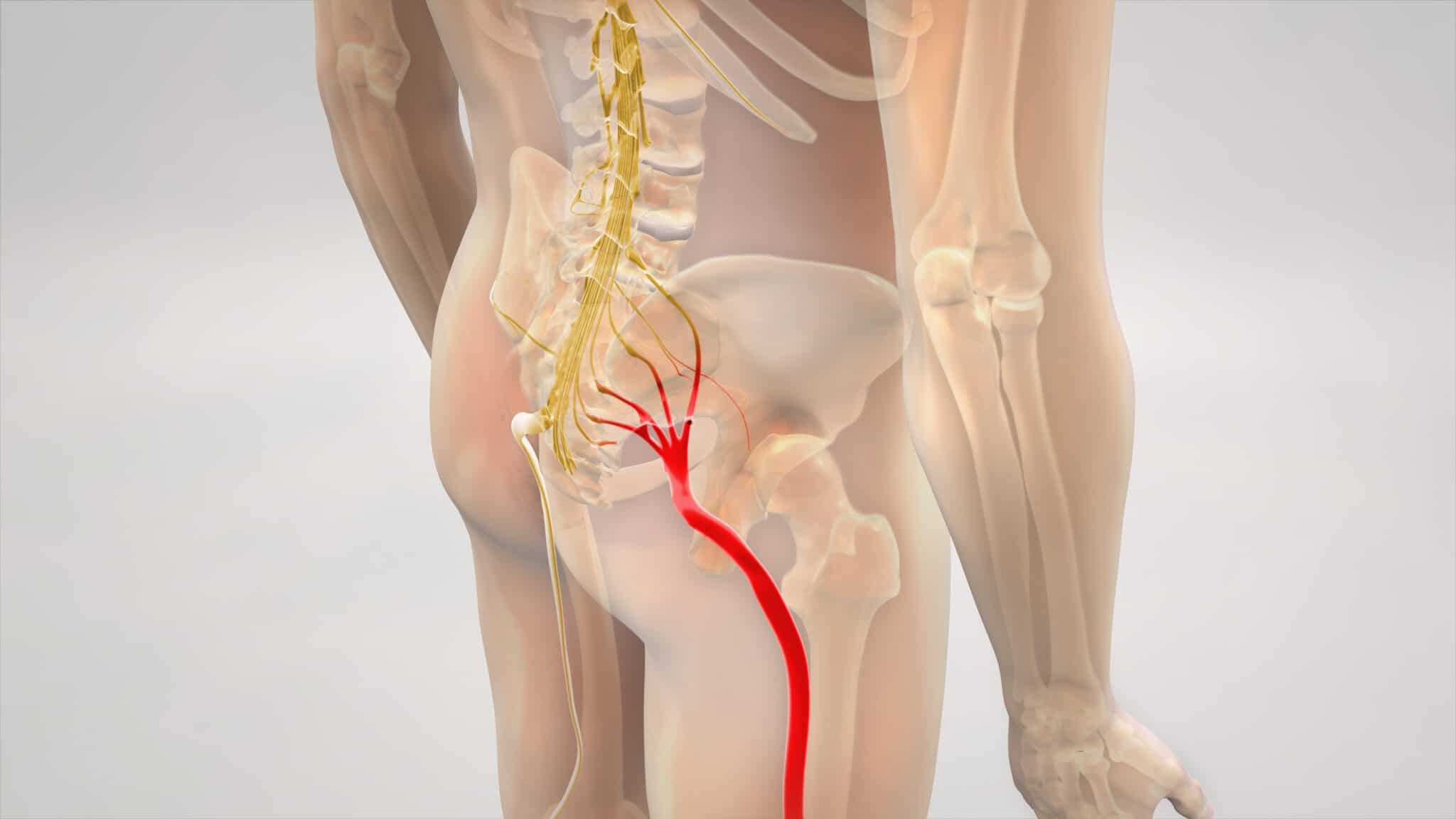
Shockwave Therapy: What Is It, How Does It Work, and Does It Actually Work?
Shockwave therapy has become an increasingly established treatment option for a range of persistent tendon and other musculoskeletal conditions. It is particularly useful when an injury has become chronic, symptoms have plateaued with conventional rehabilitation, or when a patient is struggling to progress their loading program because of pain.
Despite its name, shockwave therapy does not involve electricity being passed through the body, and it is not the same as therapeutic ultrasound. It uses mechanical acoustic energy delivered to a specific area of tissue.
At Kardinya Physiotherapy, we use shockwave therapy as part of a broader rehabilitation program rather than as a stand-alone treatment. The aim is not simply to temporarily reduce pain, but to help create an environment in which the affected tissue can tolerate progressive loading and rehabilitation.
What is shockwave therapy?
Shockwave therapy, formally known as extracorporeal shockwave therapy (ESWT), uses high-energy acoustic pressure waves delivered through the skin to a targeted area of the body.
The technology was originally developed for a very different purpose: breaking up kidney stones without surgery. It was subsequently discovered that shockwaves also produced biological effects in bone, tendon and other soft tissues, leading to their use in musculoskeletal medicine.
There are two broad forms of technology commonly referred to as shockwave therapy:
- Focused shockwave therapy – acoustic energy is concentrated at a particular depth within the tissue.
- Radial pressure wave therapy – pressure waves are generated at the applicator and spread outwards through the tissue.
These are physically different technologies, although both are commonly referred to as “shockwave” in clinical practice. The choice between them depends on the condition, depth and location of the tissue being treated. Recent research comparing the two approaches has not demonstrated a consistent overall advantage of one modality for pain or function across tendinopathies.
At Kardinya Physiotherapy, we use radial pressure wave therapy for the musculoskeletal conditions we treat.
How does shockwave therapy work?
The exact mechanism is more complicated than simply “increasing blood flow”.
Shockwave applies a mechanical stimulus to the tissues. Cells are capable of detecting mechanical forces and converting them into biochemical signals — a process known as mechanotransduction.
Laboratory and experimental studies suggest that shockwave can influence several biological processes involved in tissue adaptation and repair, including:
- stimulation of cellular activity
- changes in the extracellular matrix
- modulation of inflammatory and pain-related signalling
- stimulation of collagen production and remodelling
- changes in local blood-vessel signalling and angiogenesis
- alteration of tendon-cell behaviour and tissue organisation.
For example, studies have demonstrated changes in signalling molecules such as vascular endothelial growth factor (VEGF), endothelial nitric oxide synthase (eNOS) and transforming growth factor beta (TGF-β), which are involved in vascular and connective-tissue responses.
It is therefore probably more accurate to think of shockwave as a mechanical stimulus that alters cellular behaviour, rather than simply a treatment that “breaks up scar tissue” or “increases circulation”.
Does shockwave actually break up scar tissue?
This is a common explanation of shockwave therapy, but it is an oversimplification.
The mechanical forces produced by shockwave can influence tissue structure and cellular signalling, but the treatment is not simply mechanically breaking apart a lump of scar tissue. In chronic tendinopathy, for example, the problem is generally not just “scar tissue”. Tendons undergo complex changes in collagen organisation, cell behaviour, extracellular matrix composition and load tolerance.
The objective is therefore better described as stimulating a biological and mechanical response in dysfunctional tissue and facilitating subsequent rehabilitation.
What conditions can shockwave therapy treat?
Shockwave has been investigated in a large number of musculoskeletal conditions. The quality of evidence varies considerably between conditions, so it is important not to regard shockwave as equally effective for every problem.
The conditions for which we most commonly consider shockwave include:
Plantar fasciopathy / plantar fasciitis
Chronic plantar heel pain is one of the better-established applications of shockwave therapy.
Research has demonstrated improvements in pain and function in many patients with persistent plantar fasciopathy, although results vary between studies and treatment protocols. A 2024 systematic review and meta-analysis of randomised trials concluded that shockwave is a useful treatment option for plantar fasciopathy, while also highlighting considerable variation in treatment parameters.
Interestingly, research has also demonstrated reductions in plantar fascia thickness following treatment. However, structural changes do not always correspond directly with changes in pain, reinforcing the fact that pain and tissue structure are not interchangeable measures.
Achilles tendinopathy
Shockwave is commonly used for both mid-portion and insertional Achilles tendinopathy.
However, this is an area where the evidence is more complicated than is sometimes suggested.
Some trials and reviews have reported beneficial effects, particularly when shockwave is combined with an appropriate loading program. Other systematic reviews have found little or no clinically meaningful advantage compared with other conservative treatments. Recent evidence has therefore questioned whether shockwave should be considered a routine treatment for all Achilles tendinopathy.
This is a good example of why we do not prescribe shockwave simply because a patient has “Achilles tendinopathy”. The location of the problem, chronicity, loading tolerance and rehabilitation program all matter.
Tennis elbow / lateral elbow tendinopathy
Shockwave has been extensively studied in chronic lateral elbow tendinopathy.
There is evidence that it can reduce pain and improve aspects of strength and function, although comparisons with other treatments have produced less consistent results. A systematic review containing 27 studies and 1,871 patients found improvements compared with sham treatment at some time points, but concluded that the certainty of evidence was low to moderate and that clear superiority over other conservative treatments was not established.
More recent reviews continue to describe the evidence as mixed, with substantial variation between studies and treatment protocols.
Rotator cuff tendinopathy and calcific tendinopathy
Shockwave has been particularly investigated for calcific tendinopathy of the shoulder.
In this condition, calcium deposits develop within the rotator cuff tendons. Focused shockwave has been used to target these deposits and may assist with their fragmentation and subsequent resorption.
The evidence is sufficiently established that international shockwave recommendations include calcific shoulder tendinopathy among the standard indications.
The evidence for non-calcific rotator cuff tendinopathy, however, is considerably less convincing. A 2025 clinical practice guideline recommended against shockwave for non-calcific rotator cuff tendinopathy, while supporting its use as an option for calcific tendinopathy.
This distinction is important and is an example of why evidence should be considered on a condition-by-condition basis.
Other tendon and musculoskeletal conditions
Depending on the individual clinical presentation, shockwave may also be considered for conditions including:
- Patellar tendinopathy
- Greater trochanteric pain syndrome / gluteal tendinopathy
- Peroneal tendinopathy
- Medial elbow tendinopathy
- Other foot and ankle tendinopathies
- Some chronic muscle injuries
- Certain bone-related conditions.
International consensus recommendations include a number of these conditions as established or empirically supported indications, although the amount and quality of evidence differs substantially between them.
What does the research actually tell us?
One of the difficulties with shockwave research is that the phrase “shockwave therapy” covers a surprisingly diverse range of treatments.
Studies can differ in:
- radial versus focused technology
- energy level
- number of impulses
- frequency
- number of treatment sessions
- treatment interval
- whether treatment is painful or performed under anaesthesia
- location of treatment
- whether rehabilitation is performed alongside treatment
- the definition of the condition being treated.
Consequently, two studies can both claim to investigate “shockwave therapy” while actually delivering quite different interventions.
This makes it difficult to answer the question “Does shockwave work?” with a simple yes or no.
A better question is:
Does shockwave improve outcomes for this particular condition, in this particular patient, using an appropriate treatment protocol?
The answer varies.
What the overall evidence suggests
Systematic reviews and meta-analyses generally support shockwave as a useful treatment option for several chronic tendinopathies and plantar fasciopathy, but the strength of evidence varies between conditions.
For example, a 2024 meta-analysis incorporating 45 clinical studies found significant reductions in pain across several tendinopathies, including plantar fasciopathy, lateral elbow tendinopathy, Achilles tendinopathy and rotator cuff tendinopathy. However, the studies demonstrated substantial statistical heterogeneity, meaning the results varied considerably between studies.
Other reviews have been more cautious, particularly for Achilles and non-calcific rotator cuff tendinopathy.
More recent research comparing radial and focused treatments has also found no clear overall superiority of either modality for pain or function, with the certainty of evidence ranging from very low to low for many outcomes.
In other words, the evidence supports shockwave therapy as a legitimate treatment modality, but it does not support the idea that shockwave is a universally effective treatment for every tendon or musculoskeletal problem.
Shockwave should complement rehabilitation — not replace it
This is perhaps the most important point.
Most chronic tendon problems are fundamentally load-related problems. The tendon has to become capable of tolerating the loads being placed upon it.
Shockwave may help reduce symptoms and influence the biological environment of the tissue, but it does not automatically restore strength, capacity or movement.
For that reason, we commonly combine shockwave with an appropriate exercise and loading program.
For example, someone with Achilles tendinopathy may require progressive calf loading. Someone with plantar fasciopathy may require progressive strengthening of the calf and foot musculature. Someone with tennis elbow may require progressive loading of the wrist and forearm.
The shockwave is therefore one component of treatment rather than the entire treatment.
What does shockwave treatment feel like?
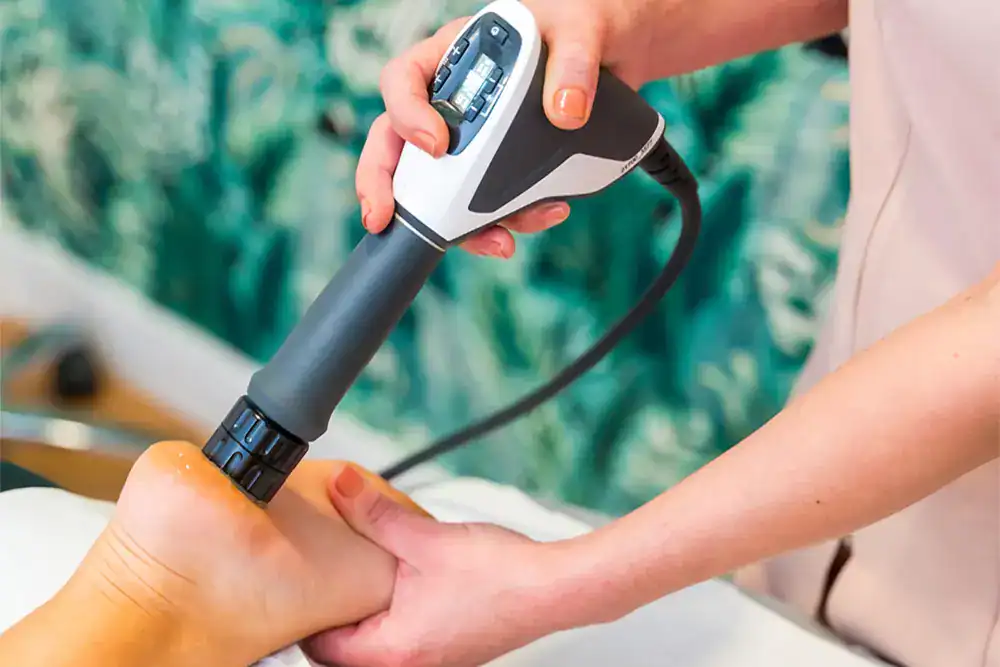
Shockwave treatment is usually performed with a handheld applicator placed against the skin.
A coupling gel is applied to allow the pressure waves to transmit effectively into the tissues. The physiotherapist then delivers a series of pulses to the affected area.
Treatment can be uncomfortable, particularly when treating a highly sensitive tendon. However, the intensity can generally be adjusted according to the individual’s tolerance and the condition being treated.
A typical course involves several treatment sessions, rather than a single treatment. The exact number and treatment parameters depend on the condition and the response to treatment.
It is also normal for the treated area to feel somewhat different for a short period after treatment. Temporary tenderness, redness, swelling or small areas of bruising have been reported in clinical studies, while serious adverse effects are uncommon.
Is shockwave therapy safe?
For appropriately selected patients, shockwave is generally considered a safe non-invasive treatment.
As with any treatment, however, it is not appropriate for everyone. Certain medical conditions, medications and anatomical locations require additional consideration or may represent contraindications.
This is one reason why a proper clinical assessment should occur before treatment rather than simply applying shockwave to the painful area.
Importantly, pain does not necessarily mean that more energy will produce a better result. Treatment parameters need to be selected according to the condition, tissue depth, treatment objective and patient’s response.
So, is shockwave therapy worth trying?
For some conditions, there is good evidence supporting its use. For others, the evidence is more uncertain.
At Kardinya Physiotherapy, we therefore don’t regard shockwave as a treatment that should automatically be applied to every chronic tendon injury. Instead, we first establish what is actually causing the patient’s symptoms and whether shockwave is appropriate for that particular condition.
When appropriate, shockwave can be a useful addition to a structured rehabilitation program — particularly when a chronic musculoskeletal problem has failed to improve as expected with conventional management.
The goal is not simply to “blast” a painful tendon with shockwaves. The goal is to use the treatment appropriately, alongside progressive rehabilitation, to help the patient return to normal activity and loading.
If you have a persistent tendon, heel, shoulder, elbow or other musculoskeletal problem and would like to know whether shockwave therapy may be appropriate, our physiotherapists can assess the condition and discuss the available treatment options with you.
References and further reading
For readers who would like to look further into the evidence, some useful recent reviews and guidelines include:
- Lippi et al. (2024) — systematic review and meta-analysis of extracorporeal shockwave therapy for plantar fasciopathy.
- Xue et al. (2024) — systematic review and meta-analysis of ESWT for rotator cuff tendinopathy.
- Campos et al. (2024) — systematic review and meta-analysis of non-invasive treatments for lateral elbow tendinopathy.
- Recent systematic reviews examining ESWT for Achilles tendinopathy demonstrate the uncertainty surrounding its effectiveness in this condition.
- Hassan et al. (2026) — systematic review and meta-analysis comparing focused shockwave and radial pressure wave therapy.
- International Society for Medical Shockwave Treatment (ISMST) — consensus recommendations regarding indications and contraindications.
A note on terminology
Although the term “shockwave therapy” is widely used, radial pressure wave therapy and focused extracorporeal shockwave therapy are not physically identical technologies. Much of the clinical literature uses “ESWT” as an umbrella term, so readers should be careful when directly comparing studies using different devices and treatment parameters.